Trading Journal Template (Printable PDF & GoodNotes)
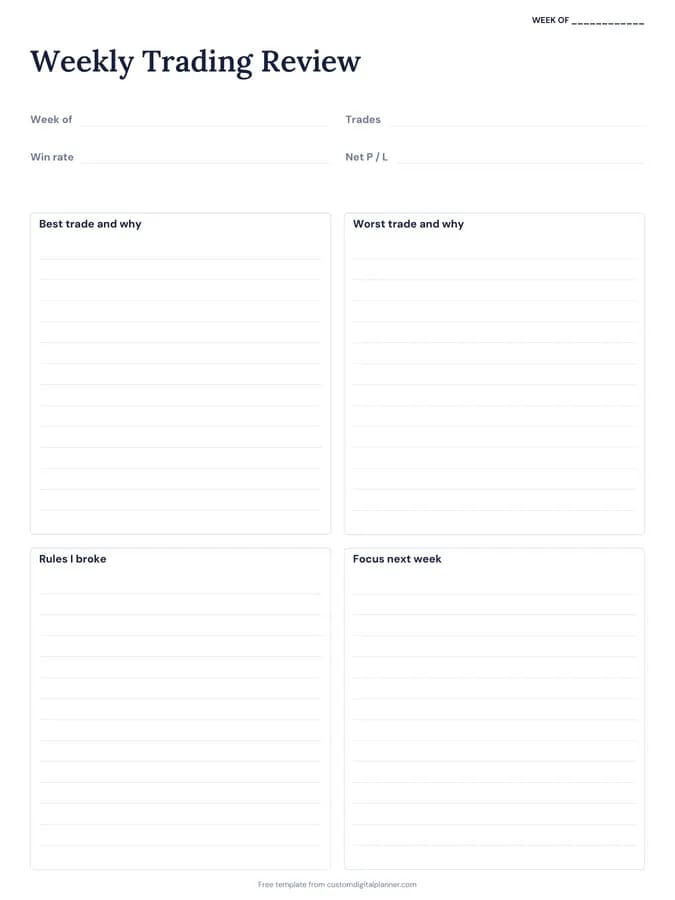
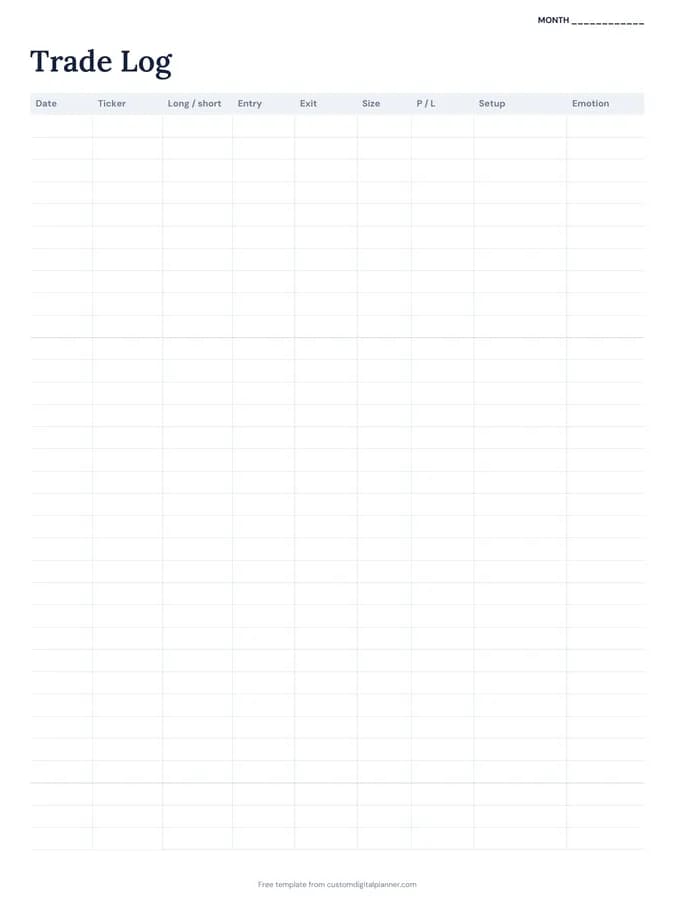
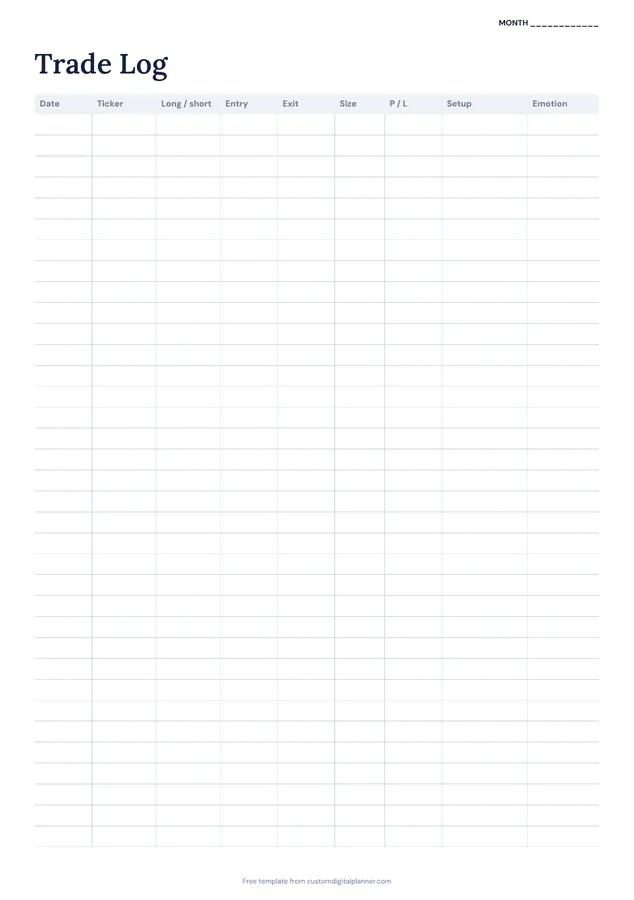
Two pages. The trade log records each trade with the date, ticker, long or short, entry, exit, size, profit or loss, setup and emotion. The weekly trading review sums up the week's trades, win rate and net P/L, then asks for your best and worst trade, rules broken and next week's focus.
- Printable US Letter8.5 × 11 in, white paper
- Printable A4210 × 297 mm, white paper
- iPad / GoodNotesAlso Notability and Noteshelf
- E-ink tabletreMarkable, Kindle Scribe, Boox
Free PDF, 2 pages, undated. No sign-up needed.
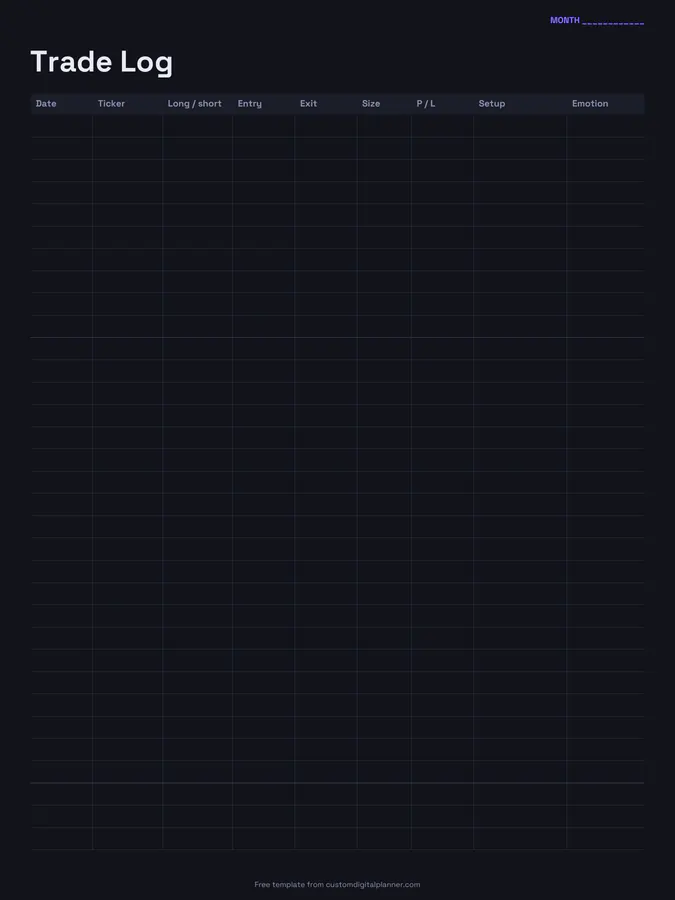
Shown for iPad in the Classic Navy theme. Printable downloads use white paper (there's a dark mode preview below); the e-ink version is black and white.
2 pages, ready to fill in.
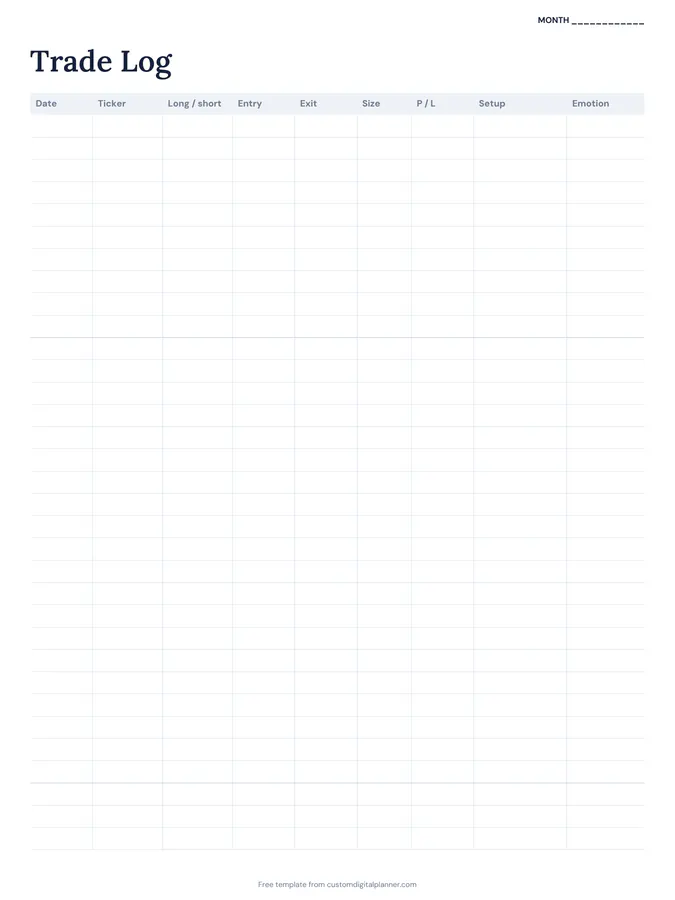
- Page 1, Trade Log: A table with columns for date, ticker, long / short, entry, exit, size, p / L, setup and emotion
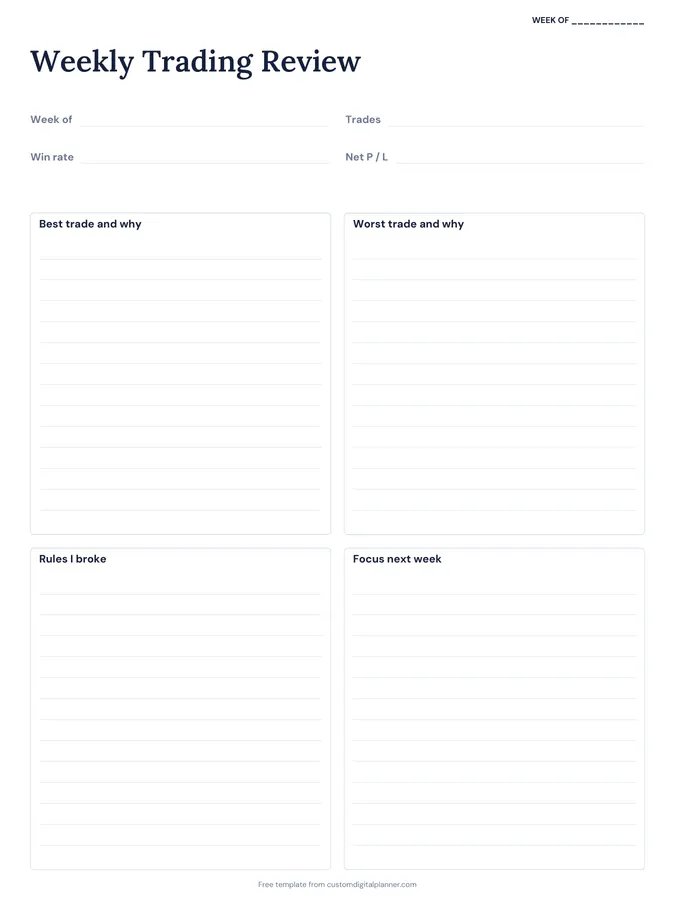
- Page 2, Weekly Trading Review: Write-in lines for week of, trades, win rate and net P / L; boxes for best trade and why, worst trade and why, rules I broke and focus next week
- A “Month” line at the top, so it works for any month and year
Who it's for
Day traders and swing traders who want to improve consistency, beginners learning with small positions, and anyone who wants to see whether their setups and emotions really affect results. Prop firm candidates and anyone working with a mentor also use it, because a written log of every trade and the reasons behind it is the first thing a reviewer asks to see.
Getting the most from a trading journal.
Log every trade, including losers
A journal that only holds wins tells you nothing. Losing trades are where the lessons are.
Name the setup
Use the same short names for your setups each time, such as "breakout" or "pullback". After a month you can see which setups actually make money.
Be honest in the emotion column
Fear, FOMO, revenge, boredom, calm. Trades taken in certain moods often perform worse, and the journal is the only place you'll see it.
Review every weekend
Fill in the weekly review before the next week opens. The rules-broken box matters most: most losses come from breaking your own plan.
Check risk, not just P/L
Note position size against your account. A winning trade that risked too much is still a mistake to fix.
Included in 1 planner
This template is a page in this planner. Open it to see everything else that comes with it.
Get it inside a full hyperlinked planner
The trading journal includes this page alongside dated month and week pages for your year, with side tabs and links between every page. Pick your device and theme, preview it free, and pay only when it's right.
- Dated pages for the whole year
- Tap a tab or a date to jump there
- GoodNotes, Notability, Samsung Notes, e-ink and print sizes
Opens the trading journal with the Trading section switched on.
Or read about the trading journal first.
About this trading journal template
Need help importing it? See devices and apps or the FAQ.
What should a trading journal include?
For each trade: date, instrument, direction, entry, exit, size, profit or loss, the setup and how you felt. Then a regular review of what worked. This template covers both.
Does it work for stocks, forex, crypto and options?
Yes. The ticker column takes any symbol and the columns are generic. For options, note the strike and expiry in the setup column.
How many trades fit on a page?
Around 25 on the printable versions. Active traders often use a page per week.
Is this financial advice?
No. It's a record-keeping template. Trading involves risk, and you should only risk money you can afford to lose.